
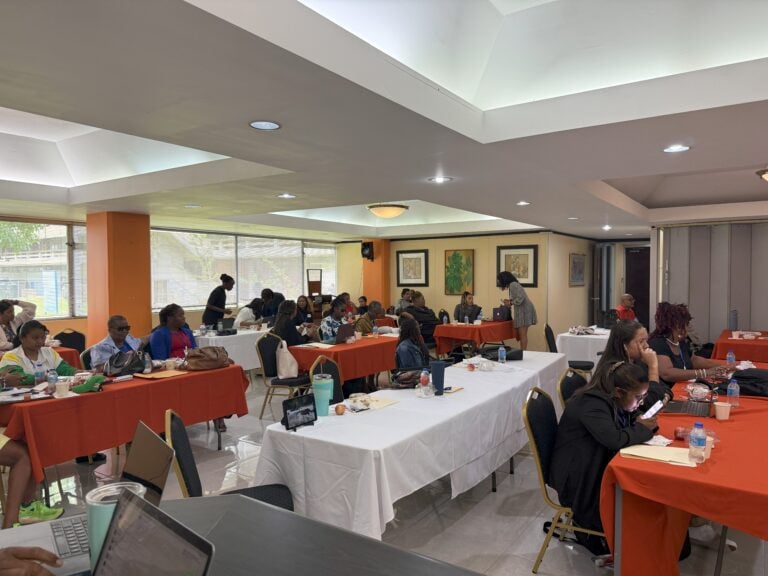
Participants engage in discussion and reflection during the symposium in Trinidad and Tobago.
Tamara Medford-Williams, Director of Black Community Initiatives at DAWN Canada, played a pivotal role as a partner, in a landmark international symposium, “Women with Disabilities, Gender and Violence: Issues Across the Caribbean,” held on June 25–26, 2025, at the University of the West Indies in Trinidad and Tobago. This project was funded by the Social Sciences and Humanities Research Council (SSHRC) and led by Ruth Rodney (Harriet Tubman Institute, York University), along with Kendra Pitt (University of the West Indies) and Eudalie Wickham-Ashby (Barbados National Organisation of the Disabled Inc.).
The event brought together advocates, researchers, civil society organizations, NGOs, ministerial bodies, and other key stakeholders from across the Caribbean including Guyana, Barbados, St. Lucia, Jamaica, Dominica, Suriname, St Vincent and the Grenadines as well as representatives from Canadian organizations.
Over two days, participants examined the urgent and often-overlooked issue of gender-based violence (GBV) against women and gender-diverse people with disabilities.
“As someone who has experienced gender-based violence throughout my life, this was far more than just another professional gathering; it was a moment of healing and connection,” Medford-Williams shared. “It was a space where I could show up fully as myself. I didn’t have to mask my chronic pain. I didn’t have to sit still or perform ‘normalcy.’ I was encouraged to bring my whole, authentic self into the room—to show up exactly as I am, unapologetically.”
Key Challenges and Barriers
The symposium underscored the complex realities faced by women with disabilities across the region. Participants identified critical challenges impacting their safety and well-being, including the heightened risks experienced by migrant women, Indigenous women, and those living in rural communities.
“Migrant women face racism, xenophobia, and the constant fear that reporting abuse will jeopardize their immigration status,” Medford-Williams explained. “Elderly women and teens are equally vulnerable, whether it’s isolation, grooming, or the lack of education about their rights and bodies. For Indigenous and rural women, discrimination and limited access to services deepen the trauma.”
Systemic barriers emerged as a recurring theme. Governments and institutions frequently sideline disability-related issues, citing cost or lack of public support. Service providers often lack the training to respond appropriately to GBV cases involving women with disabilities, and stigma within communities continues to silence survivors.
“I am accustomed to being in spaces where intersectionality is discussed—often by predominantly white voices,” Medford-Williams reflected. “Voices that sometimes minimize or entirely overlook the critical component of race and culture. But this partnership and project felt different. It meant more to me than words can fully express.”
Regional Insights and Commitments
Despite the challenges, the symposium showcased examples of progress and collective resolve. Participants shared insights on how Jamaica and Guyana have implemented laws and public education campaigns to address GBV and support survivors. Many expressed interest in adapting these frameworks to meet their unique contexts and cultural realities.
“We came together to share information, exchange knowledge, and highlight recommendations to address GBV for Caribbean women with disabilities,” Medford-Williams said. “Yet it was our shared roots that truly connected us and solidified our bond as a community.”
The gathering concluded with a commitment to inclusive, intersectional approaches—placing survivors’ experiences at the center of advocacy, policy, and service delivery.
“This project is not just about addressing violence or disability,” Medford-Williams emphasized. “It’s about creating spaces where we can truly exist, where we can be valued and re-ignite our own self-worth. Through this event, a family was born—a sisterhood where our experiences, identities, and truths are not only centered but celebrated.”

